
Search for advice about Skye and you will find a lot of people telling you not to go. Overtourism, coach parties, the Fairy Pools car park backed up down the road.
They are describing something real. They are also giving you the wrong advice.
Skye is worth it. What has gone wrong is the way most people visit it, and that is fixable. This is how to do it properly, and what to do when the accommodation has already gone, which is the situation most people are actually in when they start looking for alternatives.
First, why it earns the reputation
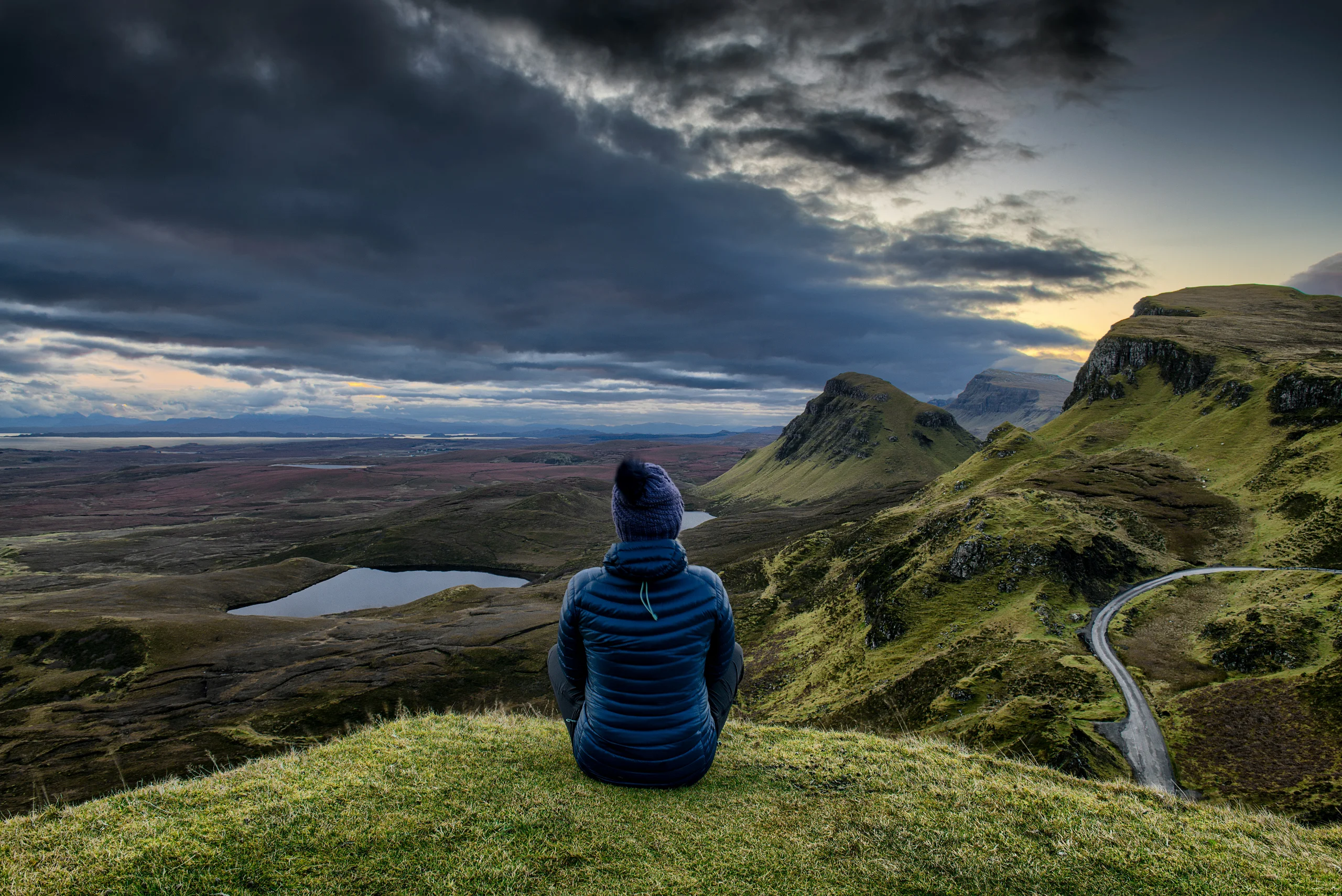
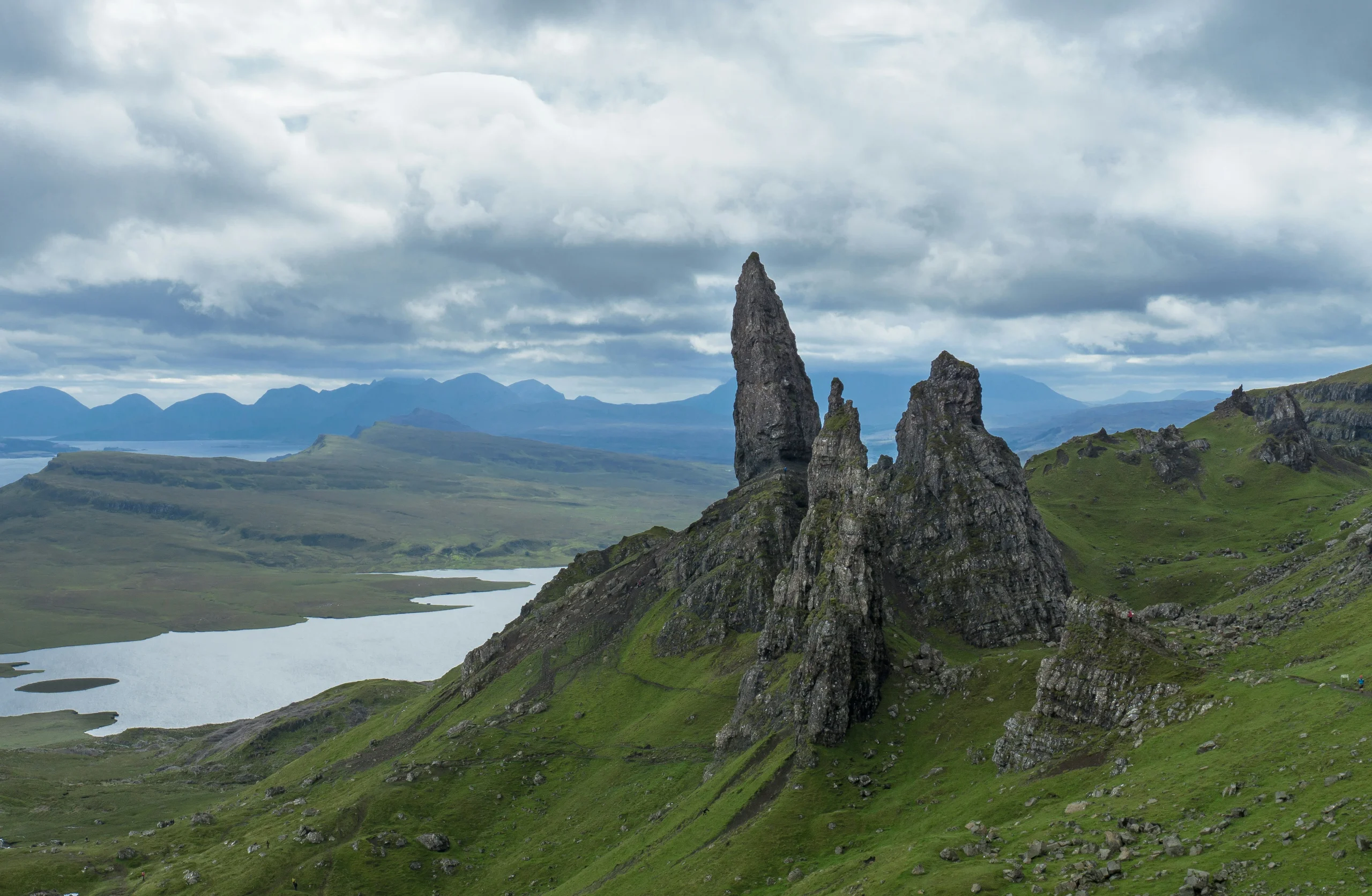
The Trotternish peninsula is a landslip, the longest in Britain, and it has collapsed into a landscape that looks invented. The Old Man of Storr is a 50 metre basalt finger standing above Loch Leathan. The Quiraing is a mess of pinnacles and hidden hollows along a cliff edge. Neither has an equivalent anywhere else in the UK.
Then there are the Cuillin, which are proper mountains rather than big hills, and the only range in Britain where the standard traverse is a mountaineering route rather than a walk.
This matters for the alternatives question later on, so it is worth stating plainly: no other Scottish island has mountains like this. If that is what you came for, the substitutes are all on the mainland.
The problem is timing, not the island
Two things go wrong for people on Skye, and both are scheduling problems.
The honeypots are crowded between ten and four. The Old Man of Storr takes well over 200,000 walkers a year and nearly all of them arrive mid-morning. Go up at seven or after five and it is a different hill. The light is better at both ends anyway.
The island is bigger and slower than it looks. People book two nights, plan six sights a day, and spend the trip driving. Three full days is the minimum that works. Portree is the sensible base because most of the island is within an hour of it.
Get those two right and the crowding largely stops being your problem. It becomes a problem you drive past on your way somewhere at half seven in the morning.
Practical notes worth knowing
Parking is charged at the main sites now, roughly £5 to £7 at the Fairy Pools, the Quiraing and the Old Man of Storr. Take a card and some coins, because the machines vary and phone signal is patchy.
May and September are the sweet spot. Fewer people, and considerably fewer midges than June through August.
Drive the Trotternish loop against the flow of the tour coaches, which mostly run it in one direction from Portree.
Winter is genuinely good if you can take the short days. Snow on the Cuillin, empty car parks, and a fair chance of being rained sideways at.
Book the beds first
This is the bit that catches everyone. Skye has a small number of rooms and a very large number of people who want them. Summer accommodation goes months ahead, and the same is true along the NC500 further north.
So the order of operations is: find a bed, then plan the trip around it. Not the other way round. Most people asking for Skye alternatives have simply done it in the wrong order and found nothing left.
If you are camping instead, the Land Reform (Scotland) Act 2003 gives you a right of responsible access across most Scottish land, which we cover properly in our guide to wild camping in Scotland.
If Skye is full, go to the mainland
Here is the honest version. The islands people suggest as substitutes, Mull and the Small Isles among them, are lovely and quieter, but they are not Skye with fewer people. Different landscape, gentler, less dramatic.
For mountains on Skye's scale, you want the north west mainland.
Assynt
The closest thing there is, and the one that comes up again and again from people who actually know the area.
Assynt sits on Lewisian gneiss, some of the oldest rock in the world, and out of that flat moorland rise a series of isolated peaks that look like nothing else in Britain. Suilven, Canisp, Stac Pollaidh, Quinag. They stand alone rather than in ranges, which is what makes them look impossible.
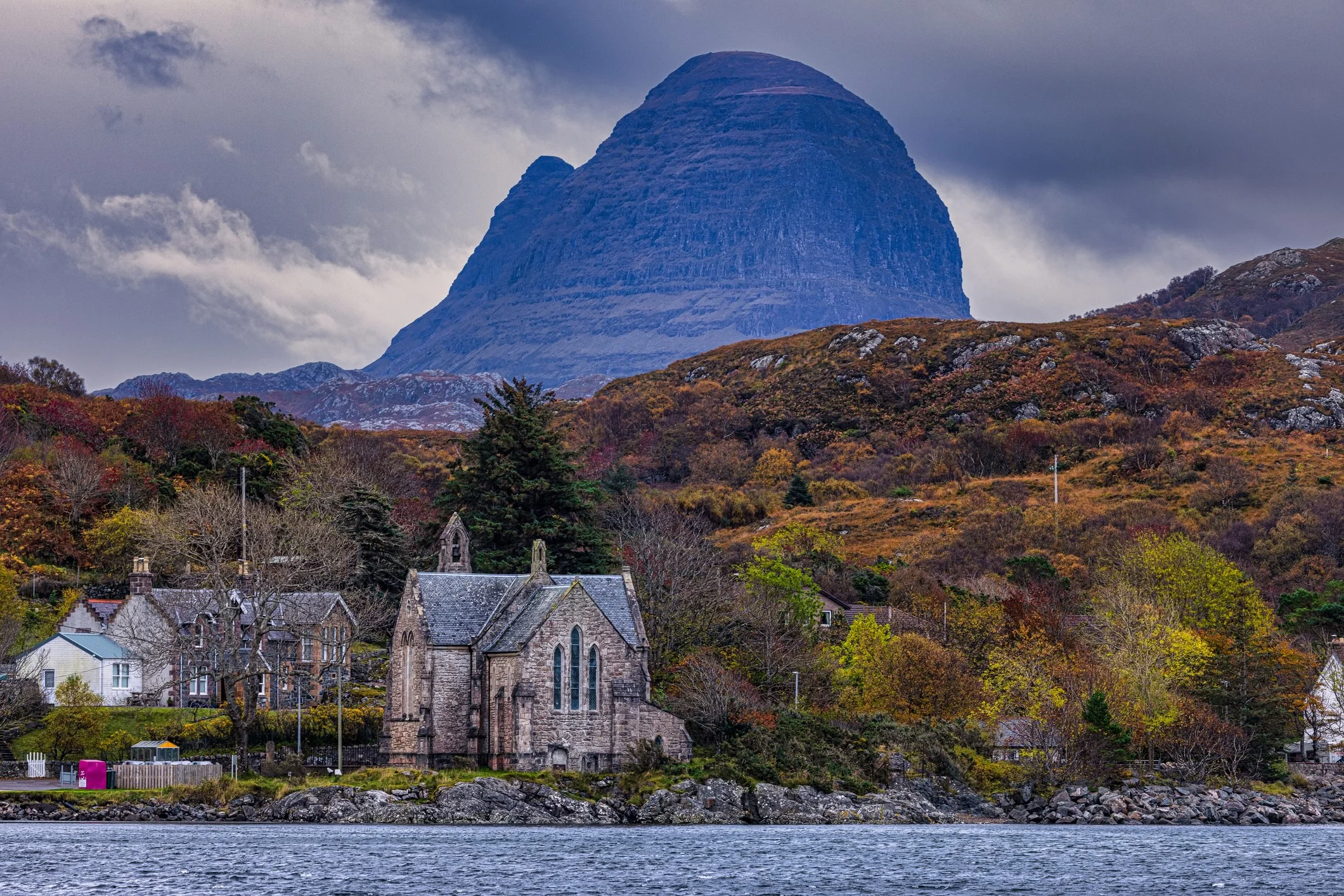
Between them are sea lochs and white sand beaches that appear with no warning at all. Achmelvich and Clachtoll are the two people mean. The Point of Stoer gives you cliff walking and the Old Man of Stoer sea stack.
Bases are Lochinver, Inchnadamph or Kylesku, with Ullapool useful as a way in but too far south to use for everything.
On the walking, be careful about how easy these look. They stand alone and they are lower than Torridon's Munros, and neither of those things makes them gentle. Stac Pollaidh is the short one at around 4.5km with 510m of ascent, two to four hours, and steeper than the numbers suggest. Suilven from the Lochinver side is a 20km day, seven to nine hours, with a long approach before the climbing even starts.
The one caveat: Assynt is on the NC500 route. It is quiet if you step even slightly off the main road, and busy in July on it.
Torridon
The other real answer. Ancient sandstone peaks rising straight out of the sea, and Beinn Eighe, which was Britain's first national nature reserve back in 1951.
Bases are Torridon itself, Shieldaig or Kinlochewe. Getting there over the Bealach na Bà into Applecross is one of the best roads in Britain and a genuinely demanding one, hairpins at a twenty percent gradient.
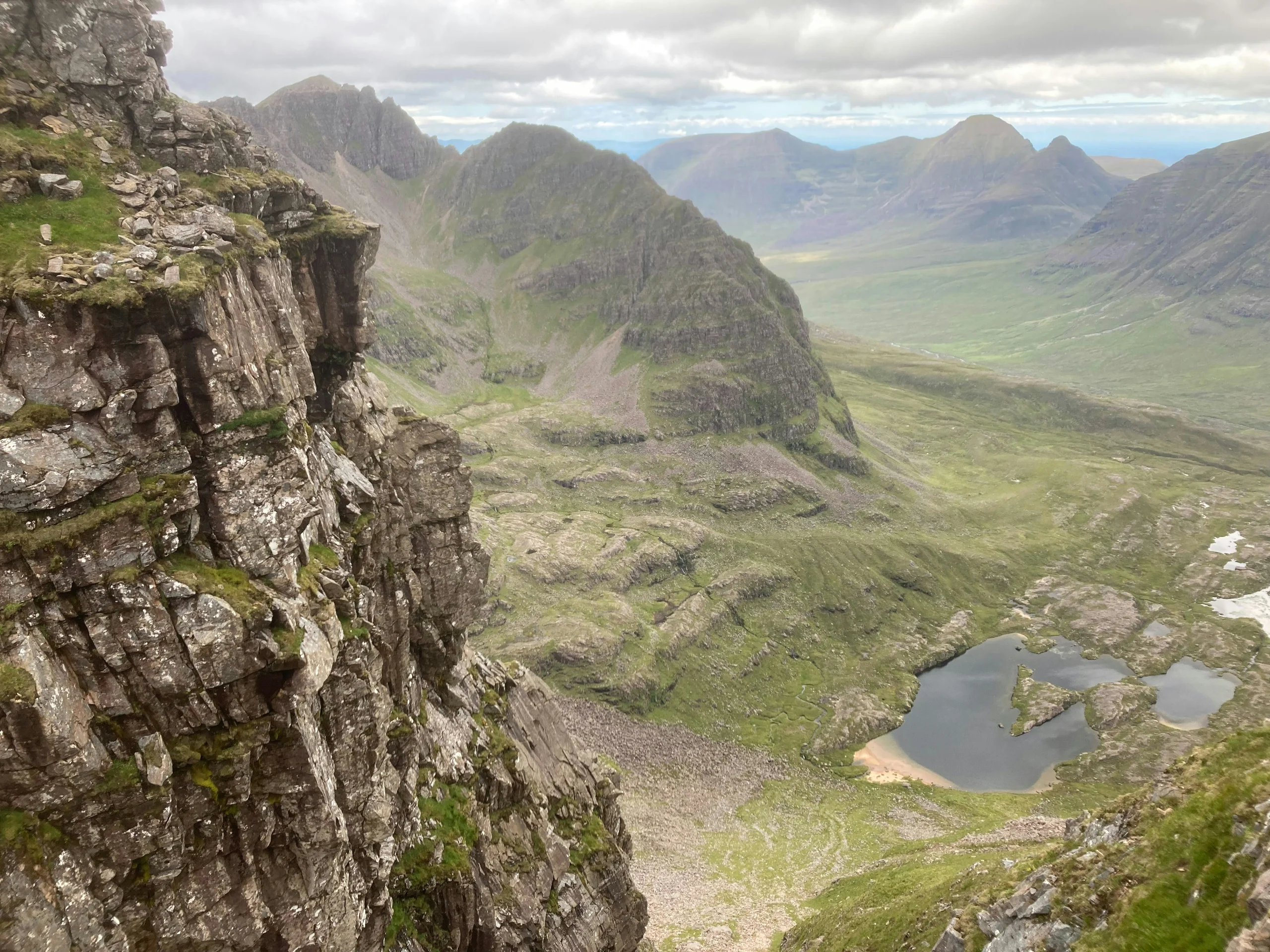
Torridon is more serious walking country than Assynt. If that is the appeal, our European mountain holidays guide covers the same instinct further afield.
What you give up
You lose the Cuillin, and you lose the strangeness of Trotternish, which really has no substitute. You also lose infrastructure. Fewer places to eat, longer between petrol stations, and less to do when the weather closes in for a day.
What you gain is space. On the mainland you can have a mountain to yourself in August, which on Skye you cannot.
So which should you book?
Book Skye if it is your first time in the Highlands, if you want the landscapes you have actually seen photographs of, and if you can get there in May, June or September.
Book Assynt or Torridon if Skye is full, if you have done Skye already, or if being alone in the landscape matters more to you than seeing the famous bits of it.
Do both if you have a week. They are a few hours apart, and the drive north from Skye through Wester Ross is not a chore.
If the emptiness is the whole point, the rest of our remote holiday destinations in Europe go further in that direction, and our Faroe Islands and Iceland comparison covers the two places that take the same idea to its conclusion.
Frequently asked questions
Is the Isle of Skye worth visiting?
Yes. The crowding is real but it is concentrated at a handful of sites in the middle of the day in high summer. Go in May or September, walk early or late, and give it three days.
What is the best alternative to the Isle of Skye?
Assynt, on the north west mainland near Lochinver, is the closest match for dramatic mountain landscape. Torridon is the other strong option. No Scottish island really substitutes for Skye's mountains.
When is the best time to visit Skye?
May, June or September. July and August are busiest and worst for midges. Winter is quiet and atmospheric if you accept short days.
How many days do you need on Skye?
Three full days minimum. It is much bigger and slower to drive than the map suggests.
Is Assynt quieter than Skye?
Considerably, though it sits on the NC500 so the main road gets traffic in summer. Step off it and you will see very few people.
Do you have to pay to park on Skye?
At the main sites, yes. Around £5 to £7 at the Fairy Pools, the Quiraing and the Old Man of Storr.