
We have hopped over to Spain's Balearic Islands at different points across the summer, and every time the same thing has caught us by surprise. The water is that blue. Not the blue of a postcard that has been tidied up, but a clear, bright blue that makes you stop on the road, look twice, and reach for your camera before you have even parked. We are Andrew and Melody, and we travel as a couple, slowly where we can, with a map that is mostly made of coves we have not reached yet. The Balearics gave us three very different islands in one trip, and one simple way to see them properly: a Vespa, an early start, and a willingness to follow a small road to see where it ends.
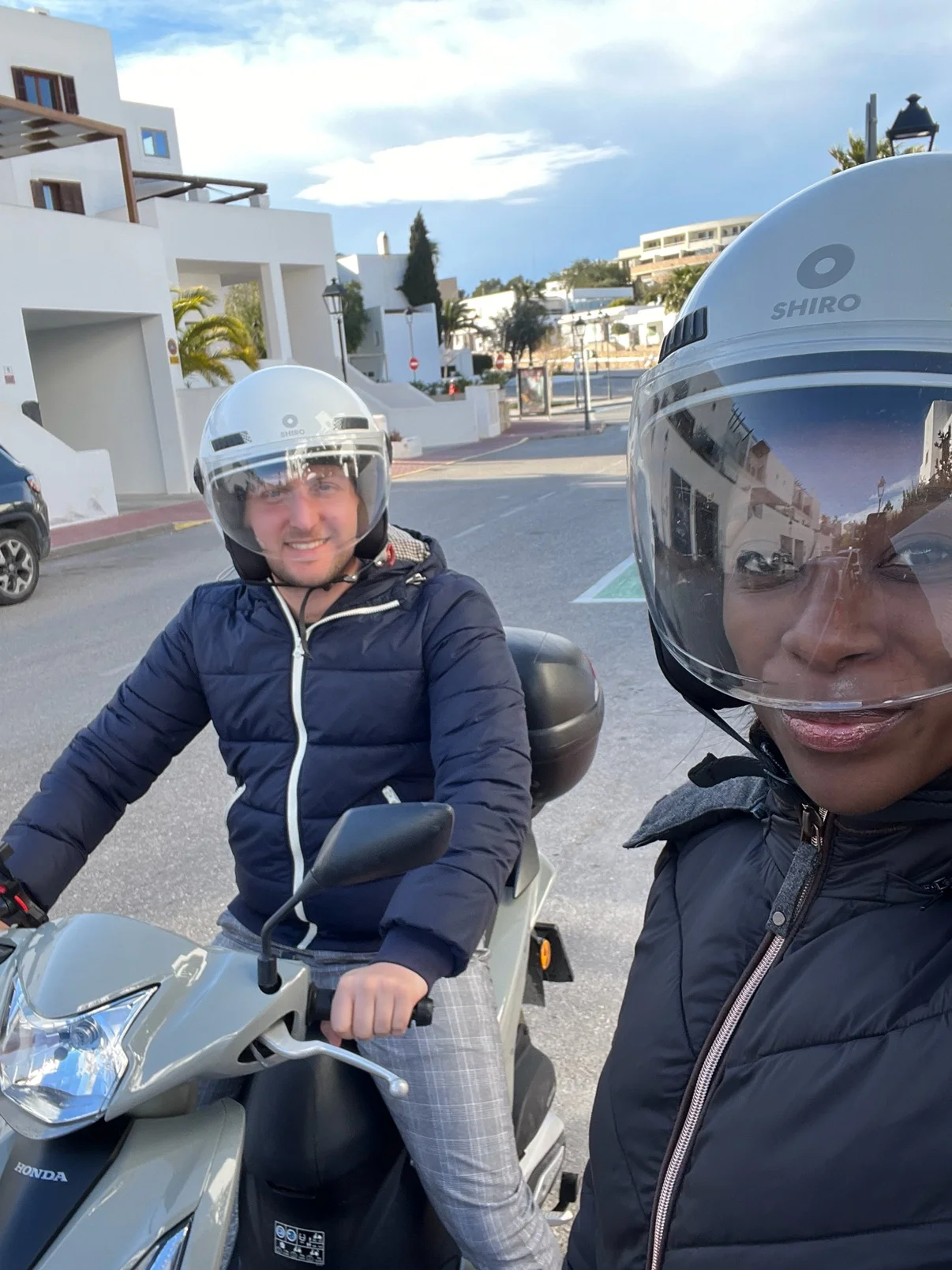
Ibiza was first, and it was not the Ibiza we had expected. Forget the clubs for a moment, because away from them the island is all dramatic cliffs and hidden calas, with some of the clearest water in the Med. We spent our days on the Vespa, the wind in our faces, chasing coves along the west coast, and our evenings chasing the light. That was the rhythm of it, and it suited us. The roads are made for a scooter. You can pull over almost anywhere, walk a short track, and find a cove that feels as if it belongs to you for an hour. Bring water shoes for the rockier coves, because the stone underfoot can be sharp, and bring a snorkel too. The clarity is incredible, and once you have seen the seabed from the surface, you will want to look again from just below it.
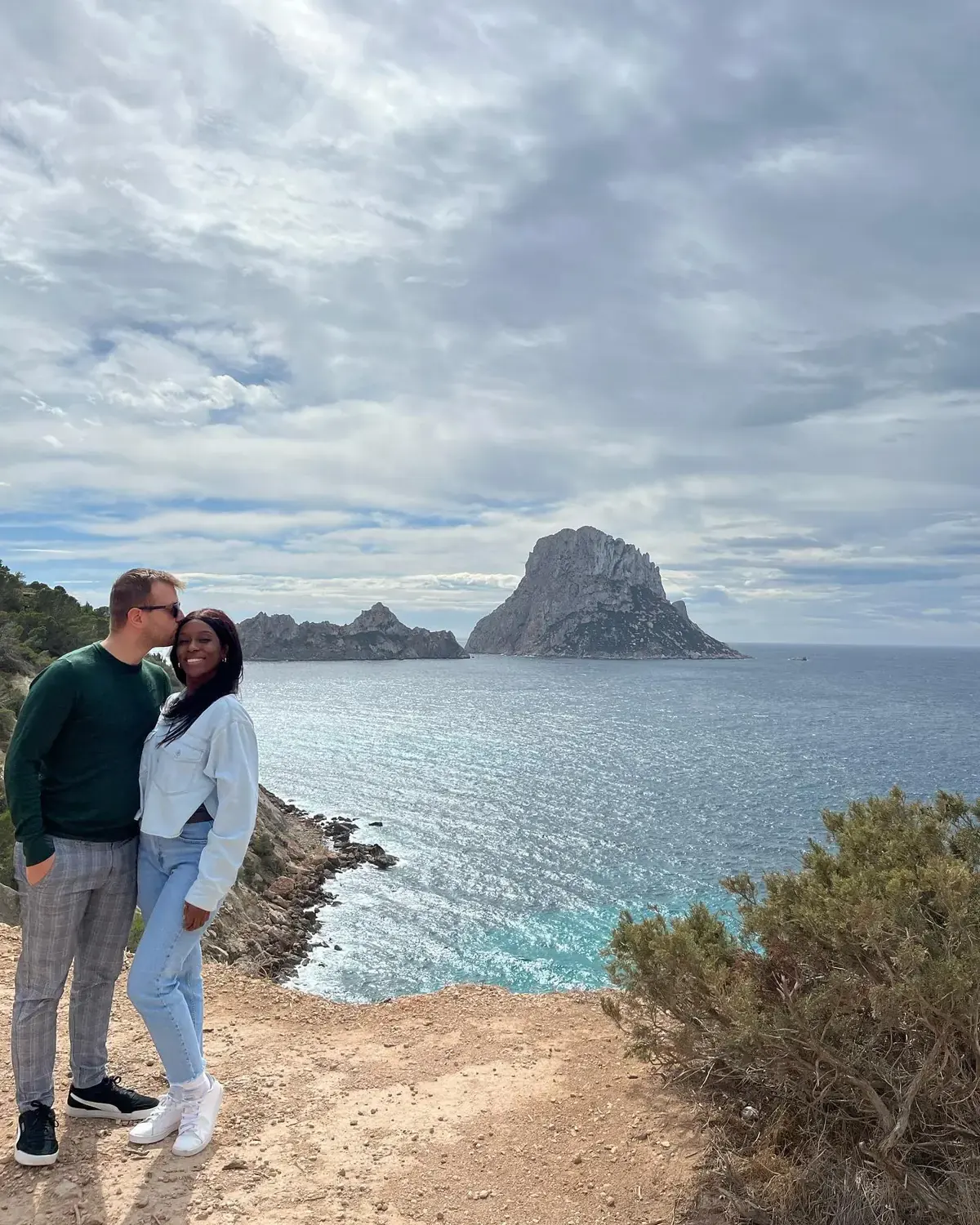
Our favourite corner of Ibiza is the wild south-west coast, where the mysterious rock island of Es Vedrà rises straight out of the sea. The clifftop viewpoints looking out to it are pure magic, especially near sunset, when the rock seems to glow and the sea turns a deeper blue. It is an easy Vespa ride out, and one of the most beautiful, least party corners of the island. From there we worked our way along the west coast to Cala Comte and Cala d'Hort, two of the coves we had dreamed about before we arrived, and then to smaller coves between them that had no name we knew, only turquoise water backed by ochre cliffs. Go early for space, we learned, because the best coves fill quickly, and the early light is kinder anyway.
Ibiza's sunsets are world-famous for a reason, and the best seat in the house is on the water. One evening we joined a sunset boat trip with a swim stop, and watched the whole west coast glow as the sky changed. The cliffs turned gold behind us, the water went still, and we swam while the sun went down. It is a simple pleasure, a drink in hand, the sea warm around you, and the island slowly turning to silhouette. We came back to shore quieter than we had left, which is usually a good sign.
Menorca felt different from the moment we arrived. It is calmer and greener, more family-friendly, and simply stunning in a quieter way. The south coast holds the dreamiest calas, soft sand and shallow, glassy water in every shade of blue, many of them reached by a short walk or, best of all, by boat. We loved the feeling of arriving by water, of hopping between coves you would never reach by land and swimming straight off the deck. The north is rawer and more dramatic. There we found the Pont d'en Gil natural sea arch and the rust-red rock and sand of coves like Cala Pregonda, which feel almost Martian, windier and wilder and all the more beautiful for it. It is great riding country for the Vespa, and half the fun is the drive between the coves.
Menorca has more than sand. Its coast is dotted with hidden sea caves where beams of light pour through the roof, and the interior is a patchwork of green fields, dry-stone walls and quiet lanes. We took our time there, stopping often, because the island rewards slow travel. At the end of the day we would find a west-facing cliff for a proper Mediterranean sunset, and then look up. Menorca is a certified Starlight destination, with some of the clearest night skies around, and on a dark night the stars feel close enough to touch. It is an unexpected way to spend an evening, and one of our favourite memories of the islands.
Mallorca is the biggest of the Balearics, and the most varied. Palma, its capital, is a genuinely beautiful city, a walkable old town of honey-stone lanes, courtyards and tapas, crowned by the enormous seafront Gothic cathedral, La Seu. We went inside, and we are glad we did. Its interior, with a Gaudí-designed chapel and one of the world's largest rose windows, is worth seeing for the light alone, which pours through the coloured glass and fills the stone with colour. We spent a long time just walking in Palma, with no plan beyond the next lane, and that is often how we travel best.
On the south-east coast we found Caló des Moro, a tiny cove that is one of the most photographed beaches in Spain. In person, the colour of the water genuinely stops you in your tracks. It gets busy and the scramble down is steep, so go early, because it is small and the early morning is when it is at its best. The whole south-east coast is dotted with coves like it, perfect for a day of swimming and exploring. In the north, the pretty harbour town of Port de Sóller sits below the Serra de Tramuntana mountains, reachable by a gorgeous vintage tram and worth it for the setting alone. Over on the east coast, the Caves of Drach are a highlight, a vast underground world of stalactites and one of the largest underground lakes in the world, complete with a little live concert on the water. It is strange and beautiful, and nothing like the bright coves outside.
Some practical details from our trip. We flew to the islands. Flights from Barcelona take about 1 hour, and cheap flights are always available from Barcelona to these islands.
Hiring a Vespa cost around 50 to 100 euros for the full two or three days. Rentals were very easy on each island, and we chose rental places with as close to 5-star reviews as possible, nearby.
We stayed in Airbnbs. Ibiza was the most expensive.
We mostly ate from grocery stores, or in restaurants at typically 30 to 50 euros for dinner. We kept it simple.
The rough total cost of the week was 400 to 500 euros, excluding flights, for 3 to 4 days.
One honest downside: Ibiza is very expensive in general and attracts a lot of party-focused tourists at times to avoid. Mallorca was amazing, but gets very busy during the peak seasons. Menorca was quieter.
Three islands, one impossible blue, and a Vespa that took us to all of it. That is how we will remember the Balearics: not as one trip, but as three, each with its own light, its own water, and its own reason to go back. If you go, go early, bring water shoes and a snorkel, and leave room in your days for the cove you had not planned to find. That is usually the one you remember.