
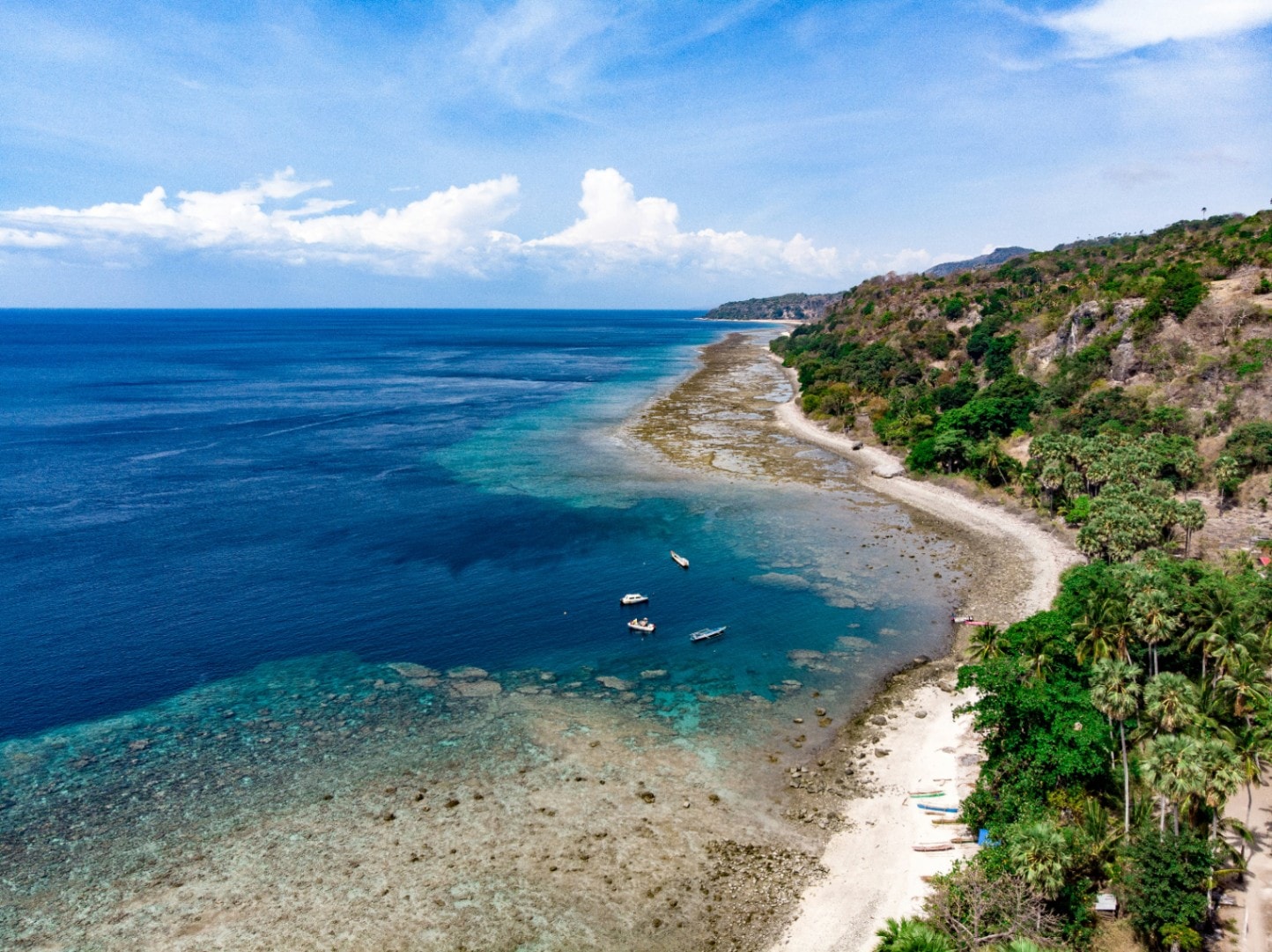
You walk into the sea from a sandy beach on Atauro Island and within twenty metres you are over coral. No boat, no tour group, no briefing. Just you, a snorkel, and a reef that Conservation International has formally documented as the most biodiverse in the world, more species per survey site than Raja Ampat. A turtle passes below without interest. The visibility goes further than you can see. Back on the beach, there are four other people.
That is Timor-Leste in 2025. In its record-breaking year for tourism, the entire country welcomed 80,000 visitors. On a busy day, Bali's airport handles 43,000 before lunch. That gap is closing, and if you want to get there before it does, now is the window.
Timor-Leste sits at the eastern end of the Indonesian archipelago, a small nation of just over a million people that only gained independence in 2002 after 25 years of occupation. It is the youngest country in Asia, and for most of the last two decades it has been focused on rebuilding rather than welcoming tourists. That is changing fast. New international flights, a new airport terminal in Dili, and a push to the front of the ASEAN Tourism Forum in 2026 have put the country on the map in a way it has never been before.
The "new Bali" tag is doing the rounds, and it is both accurate and misleading. The natural appeal is comparable: world-class diving, empty beaches, lush mountains, and genuinely warm people. The infrastructure is not comparable at all. Roads outside the capital can be rough, accommodation outside Dili is basic, and you will not find a beach club or a co-working cafe with fast WiFi anywhere near Atauro Island. If you go expecting Bali, you will struggle. If you go expecting somewhere genuinely raw and largely untouched, you will come away with one of the better trips of your life.
Getting there
Flights into Dili's Nicolau Lobato International Airport run direct from Bali (Aero Dili and Citilink), Darwin (Qantas and Air North), Singapore (Aero Dili), and Kuala Lumpur (Aero Dili and Batik Air). The cheapest route from the UK is usually to connect through Bali or Singapore. The airport recently received a new terminal and runway extension, and has a stated goal of reaching one million passengers by 2028. For now, flight options are still limited, which keeps the crowds away.
EU and Schengen passport holders enter visa-free. Most other nationalities, including UK passport holders, can get a visa on arrival at Dili Airport for $30 cash, valid for 30 days. Have US dollars ready. The currency throughout Timor-Leste is the US dollar, and outside of Dili card acceptance is patchy at best and non-existent at worst.
Dili
The capital is a small, laid-back coastal city that rewards an unhurried couple of days. It is not a place you rush through to get to the beaches, partly because the history here is worth your time.

The Resistance Museum on Rua Formosa is essential. For $1 entry you get a thorough, genuinely affecting account of the Indonesian occupation and the 25-year fight for independence, told through letters, photographs, weapons, and footage that has rarely been seen outside the country. Photography is not permitted inside the exhibition halls. Give it two hours. Follow it with the Chega! Exhibition, set inside the old Portuguese prison where resistance leaders were held, and then walk to the Santa Cruz Cemetery, site of the 1991 massacre. None of this is comfortable, but it is the context for everything else you see here.
On the lighter side, Cristo Rei is worth the hike for the views over Dili and the bay. Go in the evening when the heat drops. Halfway up, a fork in the path leads down to Dolok Oan beach, a quiet stretch of white sand largely missed by the people who only go as far as the statue.
For food in Dili, Dilicious Timor is a reliable all-rounder with good local dishes, English-speaking staff, and card payment. Mehi Cafe is a community project that trains women who have experienced domestic violence as chefs. The cakes and ice creams are excellent and the coconut ice block alone is worth the trip. Letefoho Specialty Coffee Roaster is where you go to understand what Timorese coffee is actually capable of. This country has been growing and exporting coffee since the Portuguese colonial era and the quality is serious.
Local microlets (minibuses) run fixed routes around the city for about $0.25. They pick you up when you wave and drop you when you tap a coin on the handrail. Agree a price with taxis before you get in.
Atauro Island
Thirty kilometres north of Dili, two hours by ferry, Atauro Island is the reason serious divers are already paying attention to Timor-Leste. In 2016, Conservation International recorded an average of 253 reef fish species per survey site around the island, the highest average ever documented globally, above Raja Ampat. A single site produced 315 species. The reefs here are pristine partly because almost nobody comes.

The main hub is Beloi on the east coast, where the ferries dock and most of the accommodation is based. Atauro Dive Resort and Compass Diving both run PADI-certified dives at around $60 per dive including equipment. Snorkelling directly off Beloi beach is worthwhile without any boat trip at all: the reef starts a short swim from shore, visibility is consistently good, and turtles are a regular sighting rather than a special occasion.
Ferries from Dili run on Saturdays, Tuesdays, and Thursdays. Not daily. Book at Dili port ahead of time in peak season. The Saturday ferry is the one to take if you want to arrive in time for the Beloi market, which runs along the beachfront from the port. Bring cash for your entire stay before you leave Dili. There are no ATMs on the island. Electricity is solar-powered and limited. Bring a head torch.
For accommodation, Atauro Dive Resort has dorms from $18 a night and sea-view doubles from $35. Barry's Place, run by Barry and Lina Hinton, is a well-regarded eco-lodge with a strong commitment to community tourism at $60 per person all-inclusive with three meals. Homestays through local coordinators are available from around $15 a night for a more direct window into island life.
The new road to Adara on the west coast, completed in mid-2025, now makes the west coast accessible in around 45 minutes from Beloi by vehicle rather than a five-hour hike. The sunsets from Adara are worth building a day around.
Beyond Dili
Jaco Island at the far eastern tip of the country sits inside Nino Konis Santana National Park, Timor-Leste's only national park. It is uninhabited, has no commercial infrastructure, and the reef system around it is among the most intact in the country. Getting there requires the best part of a day from Dili and arrangements with local fishermen from the mainland village of Valu, but travellers who make the effort consistently rate it among the best experiences in the country.
For mountains, Hato Builico is the base for summiting Mount Tatamailau, the highest peak in Timor-Leste. The sunrise climb is a two to three day commitment and requires a local guide. The mountain region is also where the country's coffee industry is concentrated; Ermera, less than an hour from Dili, is the centre of it.

What to know before you go
The best time to visit is June to September, when the dry season brings clear skies and good underwater visibility. The wet season runs from December through March and the ferry to Atauro can be rough. October and November bring whale migration season through the Ombai and Wetar Straits, with blue whales, humpbacks, and dolphins regularly seen from shore and by boat.
Timor-Leste is not as cheap as its Indonesian neighbours. Budget accommodation in Dili runs from $15 to $35 a night for a private room. Food from local spots is inexpensive, but international-standard restaurants reflect international prices. Budget travellers who stick to local warungs and guesthouses can manage on $50 to $60 a day. If you factor in dive trips, private drivers for mountain excursions, or a day charter to Jaco Island, that climbs quickly.
The roads outside the capital are poor in places and a scooter here demands genuine experience. Private drivers are affordable for day trips and considerably less stressful than navigating rough mountain roads on two wheels with no one else around.
The people are, by almost universal account, some of the most welcoming you will encounter anywhere in Southeast Asia. A country that spent 25 years fighting for the right to exist tends to be genuinely glad to see you when you arrive.
Get there before everyone else does. The flights are coming, the terminal is built, and the word is spreading.
Best time to go: June to September. Visa on arrival: $30 (30 days) for UK passport holders. Currency: US dollar. Fly direct from Bali, Darwin, Singapore, or Kuala Lumpur.
If you are planning a wider Southeast Asia trip, read our Bangkok guide for first-timers or our comparison of Koh Samui, Koh Phangan, and Koh Tao.