
Life's busy, you've got two weeks off in the summer, and you've been meaning to see Italy for years. The temptation is to fit it all in. Rome for the history, Florence for the art, Venice for the canals, maybe Amalfi if you can stretch the budget, one big loop through the sights you've always wanted to see. It's a sensible plan on paper, and in practice it tends to leave people tired, broke and holding hundreds of photos that blur together.
Slow travel is the alternative, and UK travellers are catching on fast. Google searches for "slow travel Italy" have doubled in the past month, and searches for Italian farm stays are up around 300% year on year. The approach they're taking is simple enough. Two bases instead of five. A week or more in each. Almost always in a region most British travellers haven't visited yet. It costs less than the city sprint, it's easier to organise, and it delivers the Italy people actually had in mind when they booked.
This is how to do it for summer 2026, where to go, and what it costs.
Why the classic three-city sprint doesn't work
Travel days cost more than you think. A single Rome to Florence leg on Frecciarossa takes an hour and a half, but you still need to check out, reach the station, wait, board, arrive, find your next hotel, check in and orient yourself. That's half a day gone. Do it twice in a week and you've lost a full day of your holiday to logistics. On a ten-day trip that's 10% of your time spent moving between places.
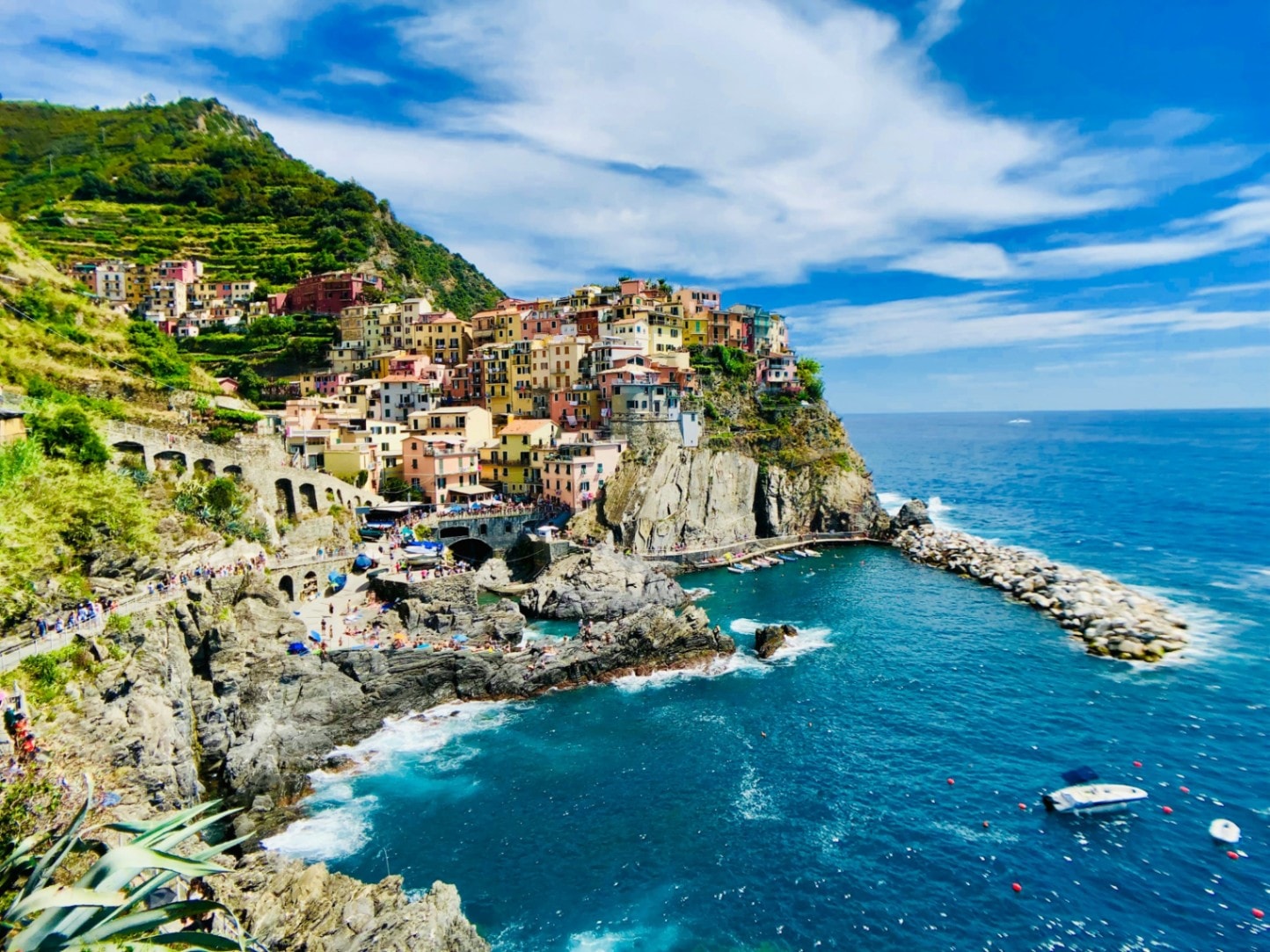
The three headline cities are also the most overcrowded they've been in a decade. Venice now charges a day-tripper fee during peak periods. Florence has restricted short-term rentals in its historic centre. Cinque Terre's five villages see up to three million visitors a year in a space that can comfortably hold a fraction of that. You are not seeing any of these places at their best in July.
And the cost gap has widened. Hotels in Florence's centre run €150 to €220 a night in summer 2026. Mid-range hotels in Lecce, which has arguably Italy's best Baroque architecture, run €60 to €100 for an equivalent standard. A coffee at a piazza table in Venice is €7. In Martina Franca it's €1.50 and the espresso is better. You're paying a premium for congestion.
None of this means Rome isn't worth visiting. Rome is extraordinary, and a slow trip can absolutely include it. It just shouldn't be three nights sandwiched between two other three-night stays.
Five regions to base yourself
If you want the slow version of Italy, you want one of these five. All of them are properly set up for week-plus stays, all have direct or near-direct UK flights, and all cost less than the classic circuit.
Puglia

The heel of Italy's boot, and the strongest single pick for a first slow trip. Puglia has an accommodation style you don't get anywhere else: the masseria, a fortified 16th or 17th century farmhouse, originally built against pirate raids, now converted into country hotels. The region has hundreds of them at every price point, from €90-a-night family-run stays to properties like Masseria Torre Maizza (Rocco Forte, around €900 a night in peak summer) and Masseria Moroseta in Ostuni, a six-room architectural conversion set in 13 hectares of organic olive groves.
The best area to base yourself is the Valle d'Itria, the inland valley between Alberobello, Locorotondo, Cisternino and Martina Franca. From a masseria here you can reach the Adriatic coastal towns of Polignano a Mare, Monopoli and Ostuni in 30 to 45 minutes. Most people who've done Puglia end up recommending this setup: four or five nights in a single Valle d'Itria masseria, day trips radiating out, no packing and repacking.
Food-wise, Puglia produces roughly 40% of Italy's olive oil. Burrata was invented in Andria, and the version you eat at Caseificio Olanda, still warm, made the same morning, is a different thing from what gets exported. Orecchiette with turnip tops is the regional pasta. The signature Bari plate is tiella, layered rice with potatoes and baked mussels.
Flights are the easy part. Ryanair flies London Stansted to Bari from around £30 return in shoulder season, and London to Brindisi from around £56. easyJet flies both routes. British Airways runs a daily service to Bari for £110 to £180 return. Flight time from London is about 2 hours 51 minutes.
Le Marche

The quieter neighbour of Tuscany and Umbria, on the Adriatic side of central Italy. Le Marche gets called "what Tuscany was thirty years ago," which is unhelpful but broadly fair. What it means in practice is Renaissance hill towns, proper beaches, and Apennine national parks, with almost no British tourists and prices to match.
Base yourself in Urbino, a UNESCO-listed Renaissance town that was effectively the birthplace of Italian humanism, or in Ascoli Piceno, whose main square (Piazza del Popolo) is considered one of Italy's best and is almost always nearly empty. From either, you can reach the Monti Sibillini national park, the coast at Sirolo and Numana, and a string of small towns that don't show up in most guidebooks.
Le Marche has no direct UK flights. You fly to Ancona, served by Ryanair from Stansted a few times a week in summer, or to Bologna (two hours by train) or Rome (three hours). The train routes are scenic.
Basilicata

Inland of Puglia, largely mountainous, and home to Matera, one of the most visually unusual cities in Europe. Matera's sassi are ancient cave dwellings cut into a limestone gorge, inhabited continuously for around 9,000 years. UNESCO lists them. You can stay in a restored sassi hotel, which is a genuinely unusual night's sleep.
Basilicata is small. A three or four night stop works well as part of a Puglia trip, flying into Bari and driving 90 minutes inland. The region also has a short Ionian and Tyrrhenian coastline with Maratea as its standout town, and Pollino national park, which barely registers on UK travel radar.
Abruzzo

The mountain region east of Rome, with three national parks (Gran Sasso, Majella, Abruzzo Lazio Molise) covering roughly a third of its territory. Wolves and bears still live here. Hill towns like Sulmona, Scanno and Santo Stefano di Sessanio are some of Italy's most atmospheric, and the region has an 80-mile Adriatic coast with beaches far less busy than anything north of it.
Abruzzo suits walkers, drivers and anyone who wants hot days and cold nights. Rome is the gateway airport (Ryanair and easyJet from London, from £40 return). From there it's 90 minutes' drive to L'Aquila or two hours to the Majella park.
Sardinia

The obvious one, and still underrated for slow travel despite its popularity. Most UK package holidays focus on the Costa Smeralda in the north-east, where August prices are absurd. The interior and south tell a different story. Base yourself near Cagliari or Oristano and you get beaches that rival the north (Spiaggia di Piscinas, Is Arutas, Chia) without the bills. The interior has Europe's densest concentration of nuraghi, Bronze Age stone towers, and villages where Sardinian is still the first language.
easyJet flies London Gatwick to Cagliari from around £60 return in May and October. Prices double in August.
How to plan it
A slow trip isn't just the same itinerary stretched out. It's a different structure. Here's what works.
Pick two bases, maximum three. Three to five nights per base is the sweet spot. This gives you two real days at each place, plus travel days that aren't wasted. A ten-day trip becomes: five nights, one travel day, four nights, fly home.
Build around one region, not one country. Trying to combine Puglia and Tuscany in a fortnight is still the fast-travel model in disguise. Pick a region and stay there. The difference in what you notice after five days in one place versus one is significant.
Drive, don't train. Most slow travel regions are rural, and rural Italy runs on cars. Train-only trips lock you into the main towns and cut you off from the masserie, agriturismi and hilltop villages that are the actual point. Hire cars in Puglia run €43 to €68 a day split between two people. Pick one up at the airport, drop it at the end.
Stay on a working farm for at least part of the trip. This is the piece most British travellers underestimate. An agriturismo in Umbria or a masseria in Puglia isn't a themed hotel. It's a farm that takes paying guests. You eat what was made that week on the land, you meet the people who made it, and the structure of your day bends to the farm's rhythm rather than the tourist one. It's the single cheapest upgrade you can make to a trip's texture.
Book at least one guided experience per base. A truffle hunt in Piedmont, an olive oil tasting in Puglia, a cheese-making morning in Umbria. These cost €50 to €150 per person and tend to be the days you remember a year later.
What it costs
Puglia is the cheapest of the five regions by a clear margin, and a useful benchmark for the others. Rough daily budgets for summer 2026:
Budget: €50 to €70 per person per day. Small family agriturismi or simple B&Bs, eating in trattorie or from markets, shared hire car.
Mid-range: €90 to €130 per person per day. Decent masseria or boutique hotel, restaurant dinners, car included.
Comfortable: €180 to €250 per person per day. Higher-end masseria or agriturismo with a pool, good restaurants most nights, activities.
Luxury: €300+ per person per day. Properties like Masseria Torre Maizza, private cooking classes, private beach clubs.
These run 30 to 50% cheaper than equivalent experiences in Tuscany, Lake Como or the Amalfi Coast.
Add flights from the UK (anywhere from £30 to £180 return depending on route and timing) and car hire (£30 to £50 a day in peak summer), and a couple can realistically do a full fortnight in Puglia for £3,000 to £4,500 all in. The same fortnight split between Florence and Amalfi would come in closer to £6,500.
If you'd rather have someone else organise it, Audley Travel offers an eight-day tailor-made Puglia trip from £3,115 per person, including return flights from London to Brindisi, B&B accommodation at two masserie, excursions and a hire car.
When to go
Not July or August. The peak summer window has become genuinely uncomfortable for slow travel in southern Italy. Puglia, Sicily and Sardinia all now regularly hit 35°C and above, coastal towns get booked out, prices peak, and the whole experience tightens up.
The three windows worth targeting:
Late May to mid-June. Warm enough to swim, countryside still green, long light evenings, almost no coach tours. This is the strongest window overall.
Early to mid-September. Sea is warmer than June, crowds thin out dramatically after the first week, prices drop 20 to 30%. Risk: the odd rainstorm in the second half.
Late September and October. The olive harvest in Puglia starts in October. Staying at a working masseria during harvest is one of the best things you can do in Italy, and you'll eat extraordinarily well. Beaches are still warm into early October.
Avoid the first three weeks of August. That's the Italian national holiday period, and prices on everything double.
A couple of practical notes before you book
ETIAS, the EU's new electronic travel authorisation, is launching in late 2026. It's a €7 online pre-authorisation, valid three years, for visa-exempt travellers including UK passport holders. It's a form, not a visa, and takes a few minutes. For trips booked for summer 2026, you'll probably still be travelling under current rules, but check the official EU site closer to departure.
Masserie and agriturismi book up faster than hotels because they have far fewer rooms. Masseria Moroseta has six rooms. Masseria Cervarolo has around fifteen. If you're aiming for a specific property in peak season, you want to be booking in April or May for August, not in June.
The slow version of Italy is a better trip than the fast one. You spend less, you see more in the sense that matters, and you come home with what British travellers used to come back from Italy with, which is a handful of places you feel you understood a bit. That was always the pitch. It just got buried under an industry that needed to sell city breaks and checklists.
If you've been meaning to book Italy for summer, this is a good week to do it. The masserie are filling, and the flight prices from the UK to Bari, Brindisi, Ancona, Cagliari and Rome are still low enough to justify the fortnight.
If the Mediterranean heat is too much, try European mountain holidays for summer 2026 instead. For food lovers, see our guide to Europe's best beer cities.